
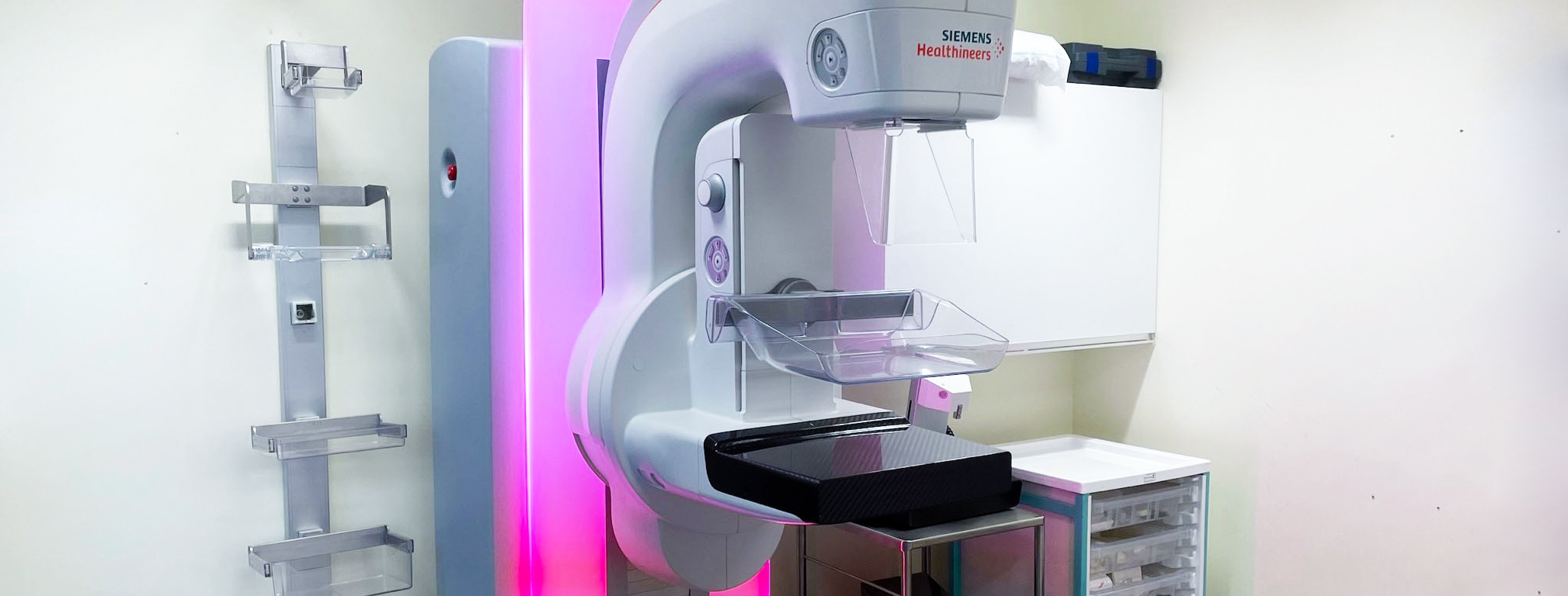
Welcome to Cheshire and Stockport Breast Screening Service
Cheshire and Stockport Breast Screening Service is part of the NHS Breast Screening Programme.
We offer breast screening to women aged 50 to 71 years every three years. You will get your appointment letter in the post.
Breast screening helps find cancer early, often before you notice anything is wrong. Finding it early can make treatment work better and help save lives.
A female mammographer will do your breast screening. She will be kind, respectful, and make sure you feel safe and at ease.
If you are over 71
You can still have breast screening. Contact our team to ask for an appointment.
Appointments
Fill in below form and we will contact you within seven working days.
We will either:
- Send an appointment letter in the post
- Phone you to arrange an appointment
Screening Appointments
Once the form is complete you will receive an appointment in the post or a phone call from one of the team within the next 7 working days.
Where We Offer Screening
Breast screening is available at the following locations:
Macclesfield
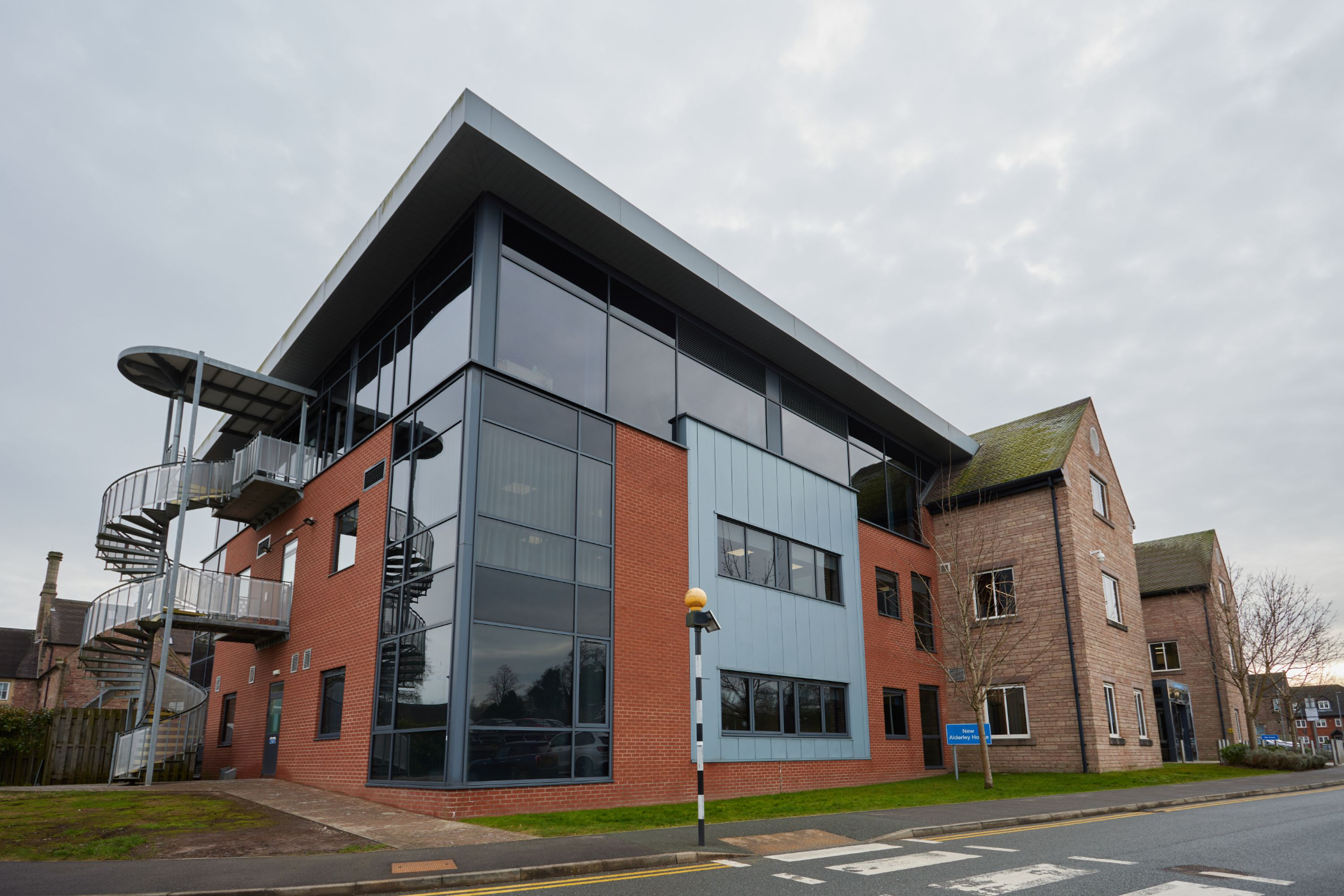
New Alderley House
Macclesfield District General Hospital
Victoria Road
Macclesfield
Cheshire
SK10 3BL
Crewe
Leighton Hospital
Middlewich Road
Crewe
CW1 4QJ
Stockport – Mobile Breast Screening Unit
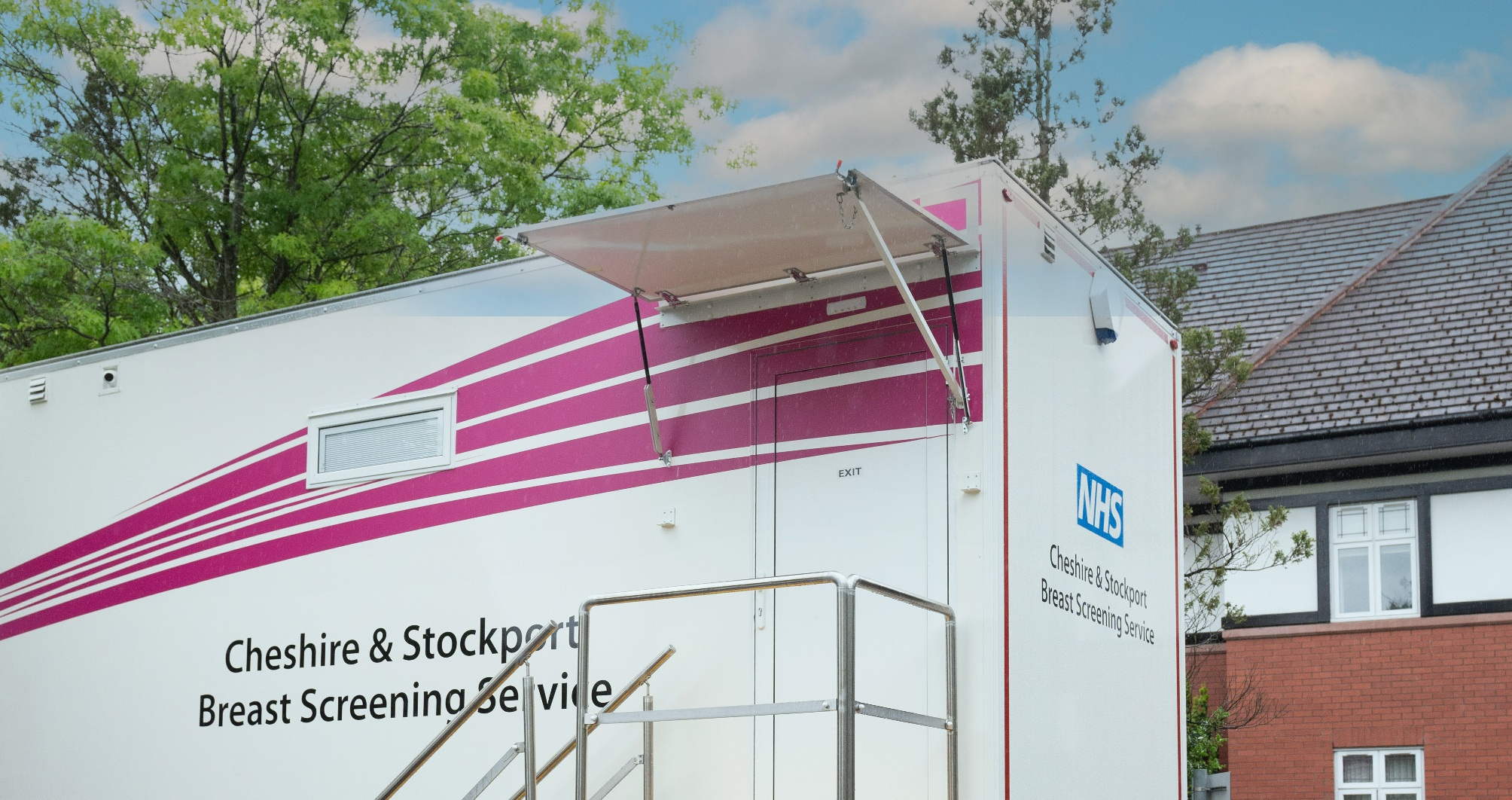
Our mobile screening unit visits different locations across Stockport, making it easier to attend an appointment close to home.
Shaw Heath Medical Centre
Gilmore Street
Shaw Heath
Stockport
SK3 8DN
Bramhall Health Centre
66 Bramhall Lane South
Bramhall
Stockport
SK7 2DY
Romiley Health Centre
Chichester Road
Romiley
Stockport
SK6 4QR
Brinnington Health Centre
Brinnington Road
Brinnington
Stockport
SK5 8BS
Contact us
If you have any questions or need to change your appointment, please contact the breast screening unit.
Phone: 01625 661157
Email: ecn-tr.breastappts@nhs.net
If you email us, please include your:
- Full name
- Date of birth
- SX number
- NHS number
Please note that appointments cannot be sent by email.
Opening hours:
Monday to Friday, 9.00am to 4.30pm
Section 1: What is breast screening?
Breast screening is a health check that uses low-dose X-rays, called mammograms. This is to look for early signs of breast cancer.
Watch mammogram video by clicking here and scrolling down.
A female mammographer will do your screening. She will:
- Talk to you about what will happen
- Check your details
- Ask if you have any concerns about your breasts
You can ask questions at any time.
During the mammogram
We take x-ray pictures of each breast.
Your breast is placed between two flat plates. The plates press the breast for a few seconds. This helps us take clear pictures using the lowest possible dose of radiation.
It may feel a little uncomfortable for a few seconds, but it will not hurt your breasts.
How Long Does It Take?
The mammogram itself only takes a few minutes.
Your visit will usually take less than 30 minutes
Will it hurt?
Some women feel a little pain when their breast is pressed for the test.
The pain does not last long. Most women feel better very quickly. A few women may have sore breasts for a short time after the test.
Before your appointment
To help us take clear pictures:
Please do not use these on the day of your appointment:
- Talcum powder
- Body powder
- Spray deodorant
- Creams or lotions on your chest or underarm area
These products can affect the quality of the mammogram images.
Helping you decide?
Breast screening is your choice. It is important that you have the information you need to decide whether to attend your appointment.


Helping you decide leaflet Helping you decide leaflet (easy read version)
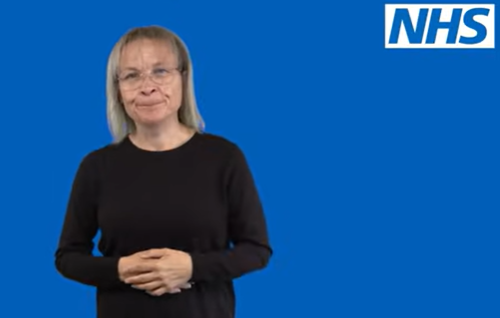
British Sign Language leaflet
This information is available in different formats, such as:
- Large print
- Different languages
- Braille
- Audio
If you need information in a different format or need extra help, please contact the screening service before your appointment.
More information and support can be found at:
Women between 50 and 71 can have a breast screening.
When it is time, you will get an invite letter in the post. The invite letter will tell you:
- When to go
- What time to go
- Where to go
The FIRST invite will arrive when you are aged 50-53 years old.
It is important your GP has the right address and mobile phone number for you
We use these details to send your breast screening invitation and text reminders about your appointment.
If we do not have your correct mobile number, you may miss important information. If the number belongs to someone else, they may receive your reminders instead.
Some transgender and non-binary people may also need breast checks.
If you are not sure if you need a breast check, talk to your GP. They can help you.
If you notice a change in your chest, do not wait for a breast check. Tell your GP as soon as you can.
For more help and information, please visit:
Breast cancer is the most common cancer in the UK. About 1 in 7 women will get breast cancer in their life.
Most cases happen in women over 50. The chance of getting breast cancer gets higher as you get older. This is why screening is offered to this age group.
Breast screening can find small changes in the breast before you notice anything is wrong. Finding problems early can make treatment easier and work better. The NHS Breast Screening Programme helps save lives. It saves about 1,300 lives each year in England.
Sometimes breast cancer can happen between breast checks. If you notice any changes in your breasts, tell your doctor (GP) straight away.
If other people in your family have had breast cancer, you may be more likely to get it too. Talk to your GP if you are worried. They can tell you if you need extra checks.
For more information and support, please visit:
Your Mammogram Results
You should get your results within 2-3 weeks. Your GP will also get a copy of the results.
There are three possible results:
Normal
No signs of cancer were found.
You will be invited again in 3 years for screening.
If you will be over 71, you can contact the service to book an appointment.
Technical recall
Sometimes the x-ray picture is not clear enough and needs to be taken again. The image may be blurry due to movement or miss a little bit of the image
You will be asked to return for further images for ‘technical reasons’
An appointment will be made at your nearest screening site so new images can be taken.
This does not mean they have found anything wrong. They just need a better picture before they can give you the result.
Further assessment required
Sometimes more tests are needed to get a clear result.
You will be invited to an assessment clinic at New Alderley House at Macclesfield District General Hospital. This is a normal part of screening.

You may have some of the following tests:
Breast examination
A doctor or healthcare professional will talk to you about your mammogram, ask about your health, and gently examine your breasts.
The doctor or nurse may check both of your breasts while you are sitting and again while you are lying down.
They may also check the lymph nodes (glands) under your arm and around your neck.
If you have been referred from a breast screening clinic, you may not need a breast examination.
Breast Imaging
You may have more x-rays to look at a specific area in more detail
Mammogram
A mammogram is a breast x-ray. Your breasts will be placed one at a time on the x-ray machine. Each breast is gently but firmly pressed with a clear plate. At least two x-rays will be taken of each breast, one from top to bottom and one from side to side.
You will need to stay still while the x-ray is taken. It may feel uncomfortable, but it only lasts a few seconds and does not harm the breast.
3D Mammogram - Digital Breast Tomosynthesis (DBT)
Digital breast tomosynthesis (DBT) is a more detailed type of mammogram. It creates 3D images of the breast using low-dose x-rays.
The breast is positioned in the same way as a standard mammogram. The x-ray machine moves around the breast and takes several images from different angles to build a clearer picture.
Breast ultrasound
An ultrasound scan uses sound waves to create a picture of the breast tissue. It is painless and usually takes a few minutes, but it can sometimes take longer.
The person doing the scan will put some gel on your breast and will move a small handheld device over your breast to look at the tissue underneath. The area under your arm may also be checked.
Further information can be found at:
Most women recalled do not have cancer. About 4 in every 100 women are asked to come back, and 3 of these will have normal results.
You can speak to a breast care nurse if you would like more information before your assessment appointment by calling 01625 663646
If you need to change your appointment, please contact us on 01625 661157
Further information can be found at:
Easy read resources:
- Coppa Feel, Thera Trust and Ansar project – Breast clinic and Testing (ideally want the link to go to the PDF Know your body: Breast clinic and testing)
How many women are invited back?
About 4 in every 100 women are asked to come back for more tests. Of these, 3 in 4 will have normal results.
Breast clinic appointments
When you arrive, you will usually meet a breast care nurse who will explain what will happen.
Further information can be found at:
- NHS – Tests and next steps
- Breast Cancer now – Your Breast clinic appointment
- Cancer research – Breast Ultrasound scan
- Macmillan – Breast Ultrasound
- Macmillan – Having an Ultrasound (Easy Read)
Breast biopsy
A breast biopsy is when a small sample of breast cells or tissue is taken. The area is numbed first using a local anaesthetic, so it should not be painful. The sample is sent to a laboratory and looked at under a microscope. Having a biopsy does not mean you have breast cancer.
If you are taking aspirin or blood-thinning medicine (anticoagulants), you should tell the doctor or nurse before the biopsy.
Further information can be found at:
When will I get the results?
Before you leave the clinic, a breast care nurse will talk to you about your test results. Most people get their results on the same day.
If you have a needle test, the nurse will make another appointment to give you the results later.
How long will I be at the clinic?
Your appointment may take 1 to 3 hours. You may be at the clinic for a while, so you can bring a friend or family member with you.
We know it can be worrying to come back for more tests. However, most women who come to this clinic are found to have a normal result.
Helping you decide
Breast screening is your choice.
All women who are invited for screening receive a leaflet called Breast Screening: The Facts. The leaflet explains:
- how breast screening can help
- what breast screening cannot do
- the benefits and risks of screening
The leaflet is available in different languages and formats, including Braille and audio.
Breast screening can help find cancer early, but like all screening tests, it has both benefits and risks. It is important to understand these so you can make an informed choice.
Feeling worried
We do our best to help women feel calm and supported at every stage of breast screening.
Your invitation letter and any follow-up letters include a phone number if you have questions.
Sometimes women are asked to come back for more tests. This is common and does not mean you have cancer. Most women who come back for more tests are found to have a normal result.
Risks and Benefits
Mammograms and X-rays
A mammogram uses a very small amount of radiation to take pictures of the breasts.
The amount of radiation is very low. The benefits of finding breast cancer early are much greater than the risk from the X-ray.
We carefully check all equipment to make sure the radiation dose stays as low as possible while still giving clear pictures.
Overdiagnosis
Screening can find cancers very early.
If you have periods, the best time to check is a few days after your period has finished. Your breasts are less likely to feel sore or swollen then.
You can check:
- In front of a mirror and look for changes.
- In the shower or bath.
- Lying down in bed.
Look at and feel your breasts, chest area, collarbone area and armpits.
Watch the NHS video on how to check your chest and changes to look for.
Self examination
Click image below and scroll down to view video

Changes to Look For
Contact your GP or healthcare professional if you notice:
- A new lump or thickening in the chest, breast or armpit.
- A change in the size or shape of your chest or breast.
- Changes to the skin, such as dimpling, redness or a rash.
- Changes to the nipple, such as discharge or the nipple turning in.
- Pain or discomfort that does not go away.
The most important thing is to know what is normal for you. If you notice any new or unusual changes, contact your GP.
More information and support can be found at:
Some of these cancers may grow so slowly that they would never cause problems during a woman's lifetime. However, doctors cannot always tell which cancers will be harmful and which will not, so they are all treated.
False alarms
Sometimes a mammogram shows a change that could be cancer.
If this happens, you will be invited back for more tests.
Most of the time, these extra tests show that the change is not cancer. Some women may need a needle biopsy or a small operation before they can give a result.
Finding cancer early
Breast cancer is often easier to treat when it is found early.
Research has shown that breast screening can help reduce deaths from breast cancer.
Breast screening saves lives by helping to find some cancers before they cause symptoms. However, screening cannot prevent all breast cancers, and it will not find every cancer.
For this reason, it is important to be breast aware and speak to your GP if you notice any changes in your breasts, even if you have recently had a mammogram.
More information can be found at:
Chest awareness means knowing your normal, so you can spot any changes.
Remember:
- Everyone's body is different.
- Your chest or breasts can change as you get older or because of changes in your body.
- Chest awareness is important for everyone.
- Get to know what is normal for you.
- Tell your GP or healthcare professional if you notice any new or unusual changes.
Checking Your Chest
There is no right or wrong way to check your chest. Check it once a month.
Easy Read:
- www.healthtalkonline.org.
- This site now has a section focusing on ductal carcinoma in situ (DCIS)
- www.breastcancercare.org.uk Information and support on breast health and breast cancer
- Interpreting service available
- www.cancerscreening.nhs.uk
- The National Cancer Screening website
- www.cancerbackup.org.uk/Aboutcancer/Screening/Breastscreening
- Cancerbackup
- www.patientopinion.org.uk
- Not for profit organisation collecting patient opinions on NHS services
- NHS Breast screening Helping You Decide
- A leaflet about making the decision to go for mammography in different languages
- NHS Breast screening 71 or Over?
- A leaflet about mammography if you are over 71 and how to arrange your appointment
- Easy Guide to Breast Screening
- A leaflet about mammography for people with learning disabilities
- Breast Implants and Breast Screening
- A leaflet about mammography for people with breast implants
I am disabled, how do I arrange my screening appointment?
Please contact us to discuss your screening appointment, as we would like to allocate more time for your appointment. Your appointment will be made at Macclesfield Hospital where we have larger rooms and disabled access. We are also able to provide a pictorial pathway of a breast screening appointment. We can also send this out in the post to you. If you would like us to do this, please call us on 01625 66 1157 and we will arrange this.
I don’t want to be screened, what do I do?
We respect your decision not to be screened, although we would encourage all women to attend for breast screening when invited. However, if you choose not to take up your invitation please contact the screening office so your appointment is not wasted. If you change your mind at any point in the future please contact us. We will be happy to make you another appointment.
I have been invited to have a mammogram, but I have had a mammogram within the last year, do I still need to come?
Please call the screening office on 01625 661157 to discuss your invitation
I have been screened elsewhere shall I still keep my screening appointment?
Please contact the screening office on 01625 661157 to establish if it is advisable for you to attend this screening appointment.
I have moved house what happens to my screening appointment?
If you have notified your practice of your new address you will be invited for screening when your practice is invited. If this is likely to be over three years since your last invitation you will be invited separately from your practice to ensure you are screened on time. If you have moved house and fear you may have missed a screening appointment please contact us.
I have had breast cancer in the past do I still need to come?
If you have had breast cancer in the past and you are currently under the care of your breast team (follow-up), your breast team will arrange a mammogram for you, on a yearly basis. It is always best to stay with the mammograms that your surgeon sends you for. If you are unsure of which appointment is best, please telephone the unit on 01625 661157.
I have breast implants will this affect my mammogram?
Breast implants appear as a solid white area on a mammogram. This may hide some of the breast tissue preventing it from being seen on the x-ray. The film readers will only be able to report on the breast tissue that they can see on your mammogram. If you have implants and have been made an appointment at the mobile screening unit please contact the screening unit on 01625 661157. Your appointment will need to be changed to the static unit at Macclesfield as the films will need to be processed immediately after the mammogram being taken.
I have a pacemaker, can I have a mammogram?
Yes, it is safe for you to have a mammogram. It is helpful if you can tell the mammographer where your pacemaker is sited. Your pacemaker may hide the small area of breast tissue behind the pacemaker, preventing it from being seen on the x-ray. The film readers will only be able to report on the breast tissue that they can see on your mammogram
I have a family history of breast cancer, do I need to have mammograms more often?
If you think you are in a high-risk group, you should discuss this with your GP. Your GP can advise you further and may refer you to a family history clinic at your local Breast Unit.
Found a problem? Report it and help us to improve our website