
Wind and bloating are common in people with IBS. Wind means gas in your tummy, and bloating means your tummy feels full, tight, or swollen. If you are constipated, this can make wind and bloating worse. Treating constipation can often help your tummy feel more comfortable. Wind and bloating can also happen when some foods are not fully digested. These foods move into your bowel, where they are broken down slowly and can make gas. This gas can make your tummy feel uncomfortable or puffy.
Before making any changes to your diet, you can take the following steps to reduce wind and bloating caused by eating and drinking by:
- Eating regular meals: Your tummy can find it hard to cope if you eat a very big meal or eat most of your food in a short time. Try to spread your food out during the day. Aim for three meals and two small snacks. This helps your tummy to work more easily and keeps your energy steady throughout the day.
- Taking your time when eating and chew your food well before you swallow. If you eat too quickly or feel rushed, you can swallow extra air. This can make your tummy feel bloated or uncomfortable. Try to eat slowly, take small bites and enjoy your food without rushing or distractions where you can.
- Adding gentle exercise following a meal: moving your body gently, such as taking a short walk, helps food move through your tummy and bowels. This can also help to reduce gas and make bloating better. Also, try not to eat a big meal just before going to bed, as your tummy works better when you stay upright and active for a little while after eating.
- Making time to relax each day: this can help your tummy feel better because stress can make IBS symptoms worse. You could try calm activities like listening to relaxing music or stories, doing gentle yoga, having a warm bath or getting a massage.
- Trying to drink plenty of fluids during the day: try to drink about six to eight glasses of fluid each day so your body stays hydrated. Drinking enough helps food move through your tummy and bowels more easily. This can help reduce bloating and keep your stools soft. Try to have fewer fizzy drinks as they can make extra gas in your tummy and make you feel more bloated. Drinking through straws can also make you swallow more air, which can add to this. If you do have a fizzy drink, try to sip it slowly.
Dietary changes
If you notice some foods make you feel more bloated or give you more wind, try writing them down. Then you can talk about them with your doctor or dietitian. This can help you see which foods make you feel better and which ones make your symptoms worse.
To help reduce bloating and wind, you may find these food tips helpful:
- Understand how fibre can affect your tummy: fibre is a part of food that your body cannot fully break down, so it passes through your tummy and bowels. There are different types of fibre, and they do different jobs in your digestive system. Some fibre helps keep your stools soft, while other types help food move through your bowels more easily.
Eating more fibre may help your tummy feel better. But if you eat too much fibre too quickly, it can make wind, tummy pain, or bloating worse. It can help to notice how your tummy feels so you can find the amount of fibre that suits you best.
Insoluble Fibre
Some types of fibre, called insoluble fibre, can sometimes make wind and bloating worse in people with IBS. If you are eating a lot of this type of fibre, it may help to have a bit less and see if your symptoms improve. Insoluble fibre is found in foods such as:
|
Breakfast Cereals |
All-Bran, Shredded Wheat, Bran Flakes, Weetabix, muesli, fruit and fibre, Special K, porridge, Ready Brek. |
|
Bread and Crackers |
Brown bread, wholemeal bread, granary bread, Ryvita, wholemeal crackers, wholemeal pitta. |
|
Pasta and Rice |
Wholewheat and/or brown pasta and rice, pearl barley. |
|
Nuts |
Almonds, coconut, hazelnuts, peanuts, Brazil nuts, walnuts |
Instead, try to include more soluble fibre foods. This type of fibre is gentler on your tummy and can help keep your poo soft and easier to pass. Make any changes slowly so your tummy has time to get used to them.
Soluble Fibre
Soluble fibre is also helpful. It mixes with water and forms a soft, gel-like substance, which can help keep your poo soft. Good sources of this type of dietary fibre include:
|
Fruits / Fruit Juices: |
Apples (all varieties - without skins). Pears (without skins). Bananas (ripe). Stone fruits (e.g., plums, peaches and nectarines – without skins). Most tinned fruit (except citrus fruits), melon, strained fruit juices, tomato juice. |
|
Vegetables: |
Carrots, parsnips, turnips, swede, baby peas and split peas, beans, lentils, root vegetables, avocado, potatoes (without skins) chickpeas, beetroot, broccoli (cooked), cauliflower (cooked), tinned tomatoes (no seeds or skins). |
|
Breads and cereals: |
Oats, porridge, Ready Brek, wholemeal bread, white bread, white rice, white pasta. |
|
Pulses |
Beans, peas, lentils |
|
Additional |
Tahini (sesame seed paste), hummus (chickpeas). |
Try to eat a mix of both types of fibre and increase the amount slowly to help your body get used to it. Drinking plenty of water also helps fibre work properly.
If you eat too much fibre too quickly, you may get gas, tummy pain or feel bloated. Keeping track of your symptoms can help you find what works best for you.
Linseeds
Try adding linseeds (also known as flaxseeds) to your diet. Linseeds are tiny seeds that are high in fibre. They can help make your poo softer and easier to pass.
How to take linseeds:
- Start with a small amount, like 1 teaspoon a day
- Slowly increase up to 2 tablespoons a day
- Add them to foods like cereal, yoghurt, salads, or soup
- Drink a small glass of water when you have them
This helps them work properly and stops your poo from becoming too hard.
It can take about three months of eating linseeds regularly before you notice any changes in your symptoms.
Oats
Eating oats regularly may help reduce IBS symptoms like bloating, tummy cramps, and wind.
Oats are high in a type of fibre that can be gentle on the gut and may help keep your digestion more steady.
You can try having oats for breakfast, like porridge or oat-based cereal. Start with a small amount and see how your body feels. If it helps, you can slowly add more into your diet.
What if I have bloating, wind and have diarrhoea?
If you are bloated with loose stools, you may benefit from a slight reduction in your total fibre intake but still consider keeping sources of soluble fibre.
What if I have bloating, wind and have constipation?
If you are bloated and are struggling with regular bowel movements, increasing both soluble and insoluble fibre may help to improve symptoms.
- Think carefully about the types of fruit and vegetables you eat: Many fruits have a natural sugar called fructose. Some people with IBS find this hard for their tummy to handle, which can cause wind and bloating.
Having smaller amounts of fruit across the day may also feel gentler on your tummy than eating lots at one time. A portion is about a small handful of fresh fruit.
Some fruits are less likely to cause tummy problems, including:
|
Banana |
Melon |
|
Grapes |
Citrus fruits (e.g., oranges, grapefruit) |
|
Strawberries |
Pineapple |
|
Raspberries |
Rhubarb |
|
Kiwi fruit |
|
Try to eat plenty of vegetables each day so you still get your five-a-day. Vegetables that are less likely to cause tummy problems include:
|
Aubergine |
Courgettes |
|
Lettuce |
Cucumber |
|
Tomato |
Green beans |
|
Carrots |
Olives |
|
Parsnip |
Peppers |
|
Spinach |
Kale |
- Be mindful of sweeteners (polyols): Some foods contain sweeteners called polyols, such as sorbitol, xylitol, and mannitol. These sweeteners can be hard for the tummy to break down. This may cause extra wind and bloating in some people. Foods that may contain these sweeteners include:
|
Prunes |
Cherries |
|
Mangoes |
Apricots |
|
Peaches |
Sugar free / diabetic products (e.g., chewing gum, mints, chocolate). |

TIP: reading food labels can help you to identify foods that contain sweeteners.
- Reduce intake of gas producing foods / drinks: Some foods can make extra gas when they are broken down in the gut. This can lead to wind, bloating, tummy pain, or a swollen tummy. Everyone is different, so you may find that some foods bother you more than others. Foods / drinks that can cause more gas include:
|
Cashews and pistachios |
Onions and garlic |
|
Beans and pulses (e.g., lentils, chickpeas, baked beans) |
Leeks and spring onions |
|
Peas and sweetcorn |
Broccoli, cauliflower, brussels sprouts and cabbage |
|
Apples and pears |
Dried fruits (e.g., raisins, apricots) |
|
Fizzy drinks |
Sugar free / diabetic products (e.g., chewing gum, mints, chocolate). |
|
Large amounts of wholegrain carbohydrates |
|
You do not need to stop eating all of these foods forever. It can help to notice which foods make your symptoms worse and eat smaller amounts of them.
- Reduce foods with resistant starch: Resistant starches are types of starch that your body cannot fully break down in the first part of your tummy. Because of this, they move into your bowel still whole.
In the bowel, tiny bacteria break them down. When this happens, gas can be made. This gas can make wind and bloating worse.
People with IBS may be more sensitive to these foods, so even small amounts can cause symptoms. Eating less of these foods may help reduce bloating and diarrhoea. Resistant starches are found in foods such as:
|
Category |
Examples |
|
Processed and snack foods |
Crisps, oven chips, biscuits, cakes, savoury snacks |
|
Ready meals and packaged foods |
Ready meals (particularly those that contain potato and/or pasta – check East Cheshire IBS diet sheet). |
|
Refined bread and baked foods |
Pizza, garlic bread, pizza bases, pastries (pies, sausage rolls). |
|
Cold cooked starchy foods |
Cold potatoes, potato salad, pasta salad |
|
Whole grains and high-fibre cereals |
Bran muesli, some breakfast cereals |
|
Pulses and vegetables |
Beans (pulses), sweetcorn |
|
Fruit |
Green (unripe) bananas |
|
Pasta |
Dried pasta (fresh pasta may be easier to tolerate) |
TIP: Try to cook fresh food whenever you can and eat it soon after it is cooked. This can help reduce the amount of resistant starch in your food. Resistant starch can build up more when food is left to cool and then eaten later. Eating fresh, freshly cooked meals may help your tummy feel more comfortable and reduce wind and bloating.
- Be careful with how much fermented food you eat: Fermented foods can be good for gut health and may help some people with IBS. These foods include yogurt, kefir, sauerkraut, kimchi, and fermented vegetables.
However, eating large amounts may cause extra wind, bloating, or tummy discomfort in some people. This is because fermented foods can create more gas in the gut. It can help to:
- Start with a small amount, such as one to two tablespoons, or a small pot of yoghurt each day.
- Add new foods slowly
- Notice how your tummy feels after eating them
Everyone’s gut is different, so the right amount will not be the same for everyone.
Probiotics are “friendly” bacteria that help keep your tummy healthy. You can take them as pills or powders, or you can eat foods that contain them, like live yoghurt or drinks such as kefir. Scientists think that people with IBS may have different bacteria in their gut. Probiotics may help some people feel better, but they do not work for everyone.
How to try probiotics
- Try them for at least four weeks to see if they help
- Take one type at a time
- Follow the instructions on the packet (for example, one capsule or one drink each day)
- If they help, you can keep taking them
- If they do not help, you can try a different type
- If they make your symptoms worse, stop taking them
Probiotics are usually safe, but they are not for people with a very weak immune system.
Some people may feel a little more windy at first. This usually gets better as your body gets used to them.
Probiotics are usually safe, but people with a very weak immune system should not take them unless a doctor says it is OK.
Some probiotics may help constipation more than others, but you may need to try a few to find one that works for you.
Here are some probiotic capsules and tablets that you might find helpful:
|
Symprove
|
Culturelle Adbominal Support and Comfort.
|
|
Bio-Kult
|
Jarrow Ideal Bowel Support
|
|
Alflorex (Original, Chewable tablets).
|
Optibac Probiotics Bifido and Fibre
|
|
Culturelle Digestive Daily Probiotic
|
Yakult
|

If you want to try Symprove, you can follow the link below to get 50% off a four-week trial: Get started and save 50%
Some shop‑bought medicines may help with these symptoms. These do not fix IBS, but they can make the tummy feel easier.
|
Type of medicine |
How it works |
Examples |
|
Anti-wind medicines |
Help break up bubbles of trapped wind so they can pass more easily. |
Wind-eze |
|
Peppermint oil capsules |
Help to relax the bowel and reduce bloating and cramps |
Colpermin Mintec. |
|
Tummy muscle relaxers |
Help calm tight or cramping tummy muscles |
Buscopan, mebeverine |
|
Pain-relief |
Can help with mild tummy pain, but not strong cramps |
Paracetamol |
When to see your GP
It’s a good idea to speak to your GP if:
- Your bloating is very painful or happens most days
- You feel full very quickly when eating
- You have a lot of trapped wind that doesn’t improve with shop‑bought treatments
- Your tummy looks swollen and stays that way
- Your symptoms are getting worse or stopping you from doing normal things
Your GP can help you work out what might be causing your symptoms and talk about other treatments that may help.
If shop‑bought treatments and food changes haven’t helped, your GP may talk to you about prescription medicines. These are used when symptoms are more stubborn or keep coming back.
|
Type of medicine |
How it works |
Examples |
|
Stronger tummy muscle relaxers |
Help calm tight or cramping tummy muscles |
Prescription‑strength mebeverine or hyoscine butylbromide |
|
Low‑dose nerve‑pain medicines |
Help calm down tummy pain and reduce sensitivity in the gut |
Amitriptyline (low dose) |
|
Medicines for constipation‑related bloating |
Help the bowel move more easily, which can reduce bloating |
Linaclotide, prucalopride |
These medicines are not right for everyone. Your GP will choose what might help based on your symptoms, your health, and what you have already tried
There are some simple things you can try that may help reduce wind and bloating and make your tummy feel more comfortable.
- Try not to wear tight clothes around your tummy. Loose clothes can help your stomach feel less squeezed or uncomfortable.
- Gentle movement can help trapped gas move through your body. A short walk, gentle stretching, or simple yoga can all help your tummy feel better.
- You could try peppermint oil capsules. These may help relax the muscles in your tummy and reduce trapped wind. Some people also find ginger tea soothing for their digestion.
- Medicines like simethicone (for example, Gas-X or Windcheaters) can help break up trapped wind, which may ease pressure and bloating.
- A warm heat pack on your tummy can also help relax the muscles inside your belly and may make trapped wind feel better.
IBS doesn’t happen because of stress, but stress can make it feel worse. Your brain and your gut are connected, so when you feel worried or upset, your tummy can react too. Many people notice their IBS gets worse when they feel stressed.
Ways to help your body stay calm:
Calm Breathing and Relaxation
- Try slow, deep breaths.
- Sit quietly for a few minutes each day.
- You can also use a relaxation or mindfulness app to help you feel peaceful.
Mindfulness
Mindfulness means paying attention to your breathing and how your body feels. Doing this often can help your tummy feel better over time.
Gentle Exercise
Activities like yoga or tai chi use slow movements and calm breathing. Many people with IBS find these helpful.
Sleep and Rest
Getting enough sleep is important. When you’re tired, your body can feel pain more easily, and stress feels bigger.
Fun and Hobbies
Doing things you enjoy (e.g., hobbies, seeing friends, or relaxing) helps your body feel safer and calmer. This is not being “self‑indulgent”; it’s part of looking after yourself.
If You Feel Anxious
If you often feel worried, talking to a professional can help. Some people use CBT (a type of talking therapy) to manage anxious thoughts, and there are even CBT apps made for people with tummy problems.
Useful websites and apps
- NHS East Cheshire Talking Therapies - The Big Life Group
- Stress - Every Mind Matters - NHS
- Calm: Sleep & Meditation (requires paid subscription for full access)
- Smiling Mind (free app)
- NERVA: Gut-brain therapy (requires paid subscription for full access)
What is it for?
Abdominal massage (a gentle tummy rub) can be used to help your body work better. It can help your tummy feel good and stay healthy. It can:
- Help your tummy muscles relax, which can make it easier to go to the toilet
- Help poo move through your body faster
- Reduce tummy pain, wind, and bloating
- Help with period pain and cramps
Is this safe for me to do?
Abdominal massage is usually safe for most people if it is done gently.
It’s best not to eat a big or spicy meal for a few hours before or after a tummy massage.
Do not do it if you have:
- A cut or wound on your tummy that is less than six weeks old
- A serious back or spine injury
- You are pregnant
How to do a tummy massage by yourself
- Lie on your back. You might feel comfier if you put a pillow under your knees.
- Put your hands on your lower tummy and rest them there. Take slow, calm breaths for a few minutes.
- You can use a little bit of massage oil. Rub your hands together for about 30 seconds to warm them up.
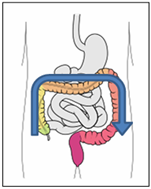
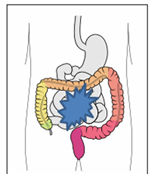
- There are four main types of movements you can use:
- Stroking: gentle, smooth movements
- Effleurage (say: ef-loo-raj): light, sweeping strokes
- Kneading: gently squeezing and lifting the tummy
- Vibration: small, gentle shaking movements
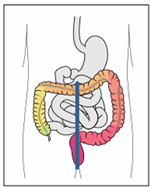
|
Step 1: Stroking
|
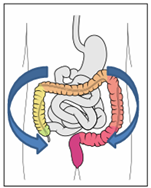
Step 2: Stroking
|
|
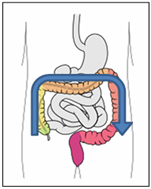
Step 3: Effleurage
|
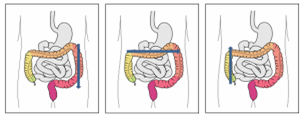
Step 4: Kneading
|
|
Step 5: Effleurage Do the same moves from step three for two minutes.
|
Step 6: Vibrations
|
Diaphragmatic breathing, also called belly breathing, can help calm the body when IBS symptoms feel worse. Stress and worry can make the gut more sensitive and may lead to pain, bloating, or changes in bowel habits.
This type of breathing helps switch the body from “fight, flight, or freeze” mode into a calmer and more relaxed state. It does this by helping the nervous system slow down and relax. When the body feels calmer, the gut can feel calmer too.
Belly breathing may help to:
- Reduce stress and tension
- Relax the stomach muscles
- Improve digestion
- Reduce bloating and tummy discomfort
- Help you feel more in control of symptoms
When practising belly breathing:
- Sit or lie in a comfortable position
- Place one hand on your chest and one on your tummy
- Breathe in slowly through your nose so your tummy rises
- Breathe out slowly through your mouth
Try to practise for a few minutes each day, especially during times of stress or when symptoms begin.
See link below:
Breathing Technique to Relax: Belly Breathing Exercise with Dora Kamau
Found a problem? Report it and help us to improve our website